Infinite Build
October Three: Migrating and Modernizing Three Connected Websites
Project Overview
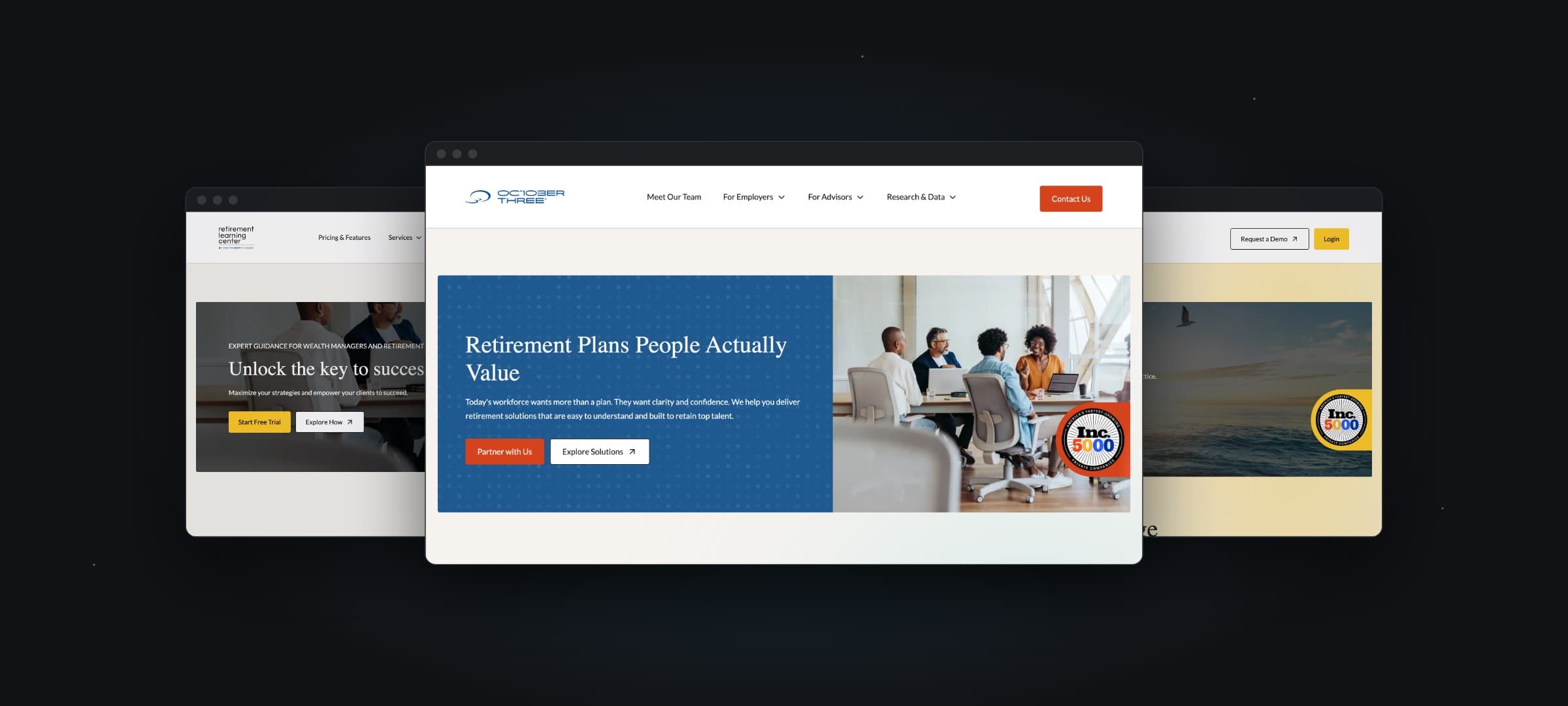
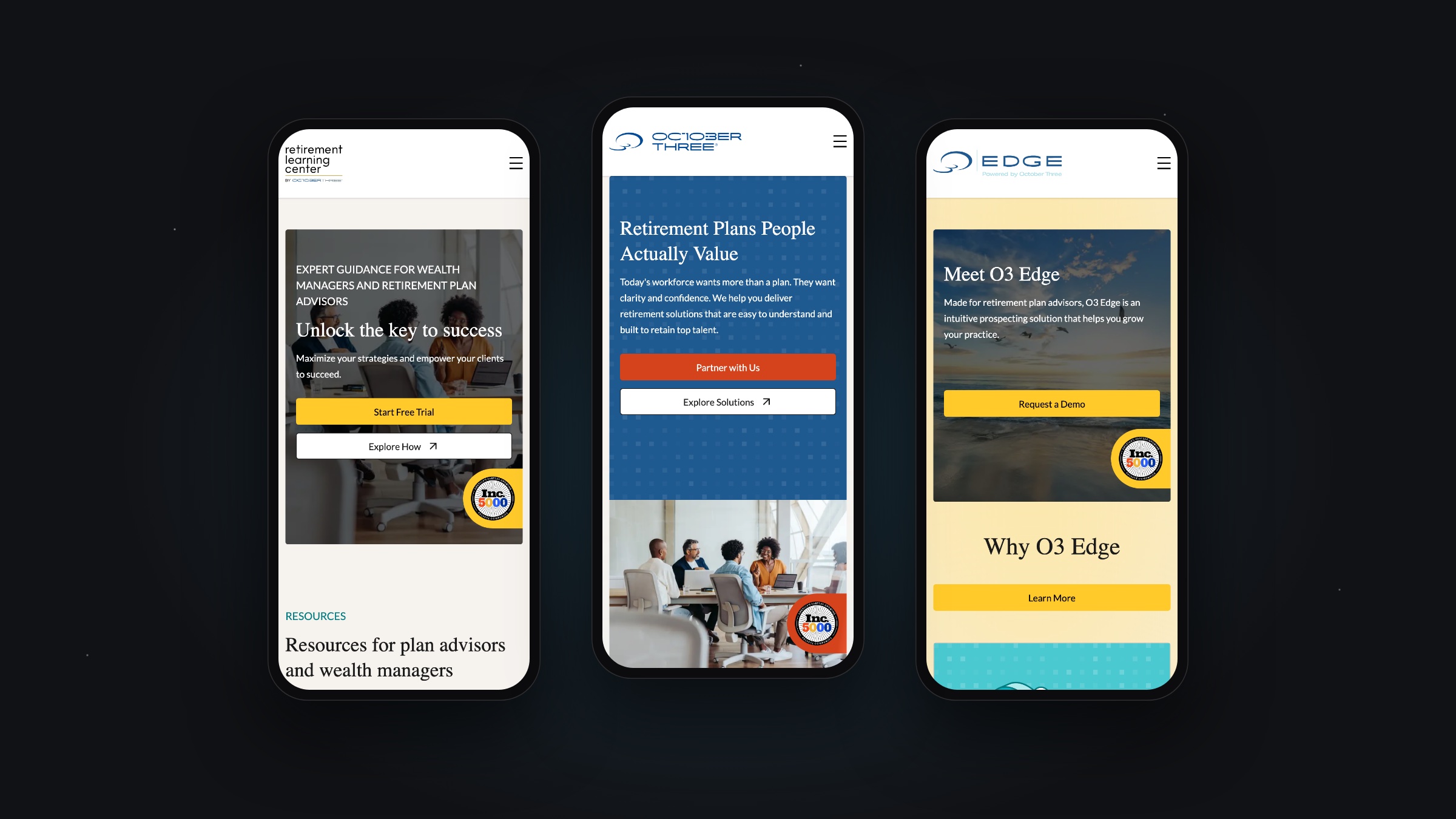
October Three needed to modernize three websites: its main corporate website, Retirement Learning Center, and O3 Edge.
Each website served a different purpose and audience. October Three focused on retirement consulting services for employers and plan advisors. Retirement Learning Center provided education, resources, and expert guidance for retirement plan advisors. O3 Edge offered prospecting tools and insights to help advisors grow their practices.
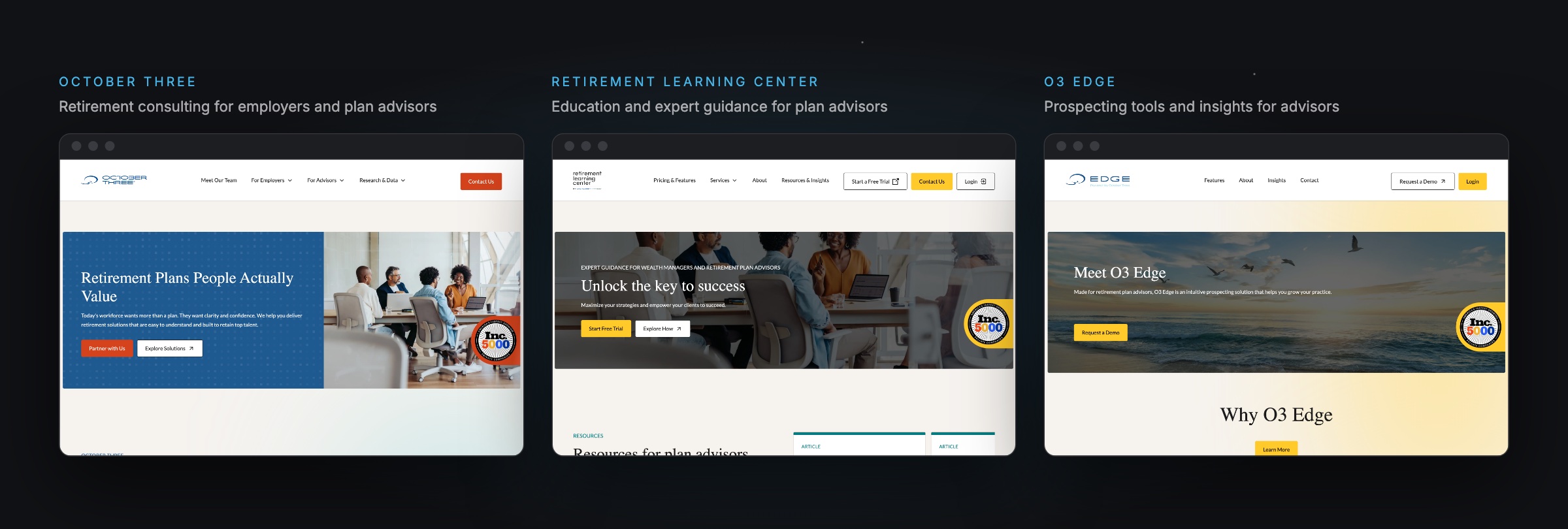
The project involved migrating content from Contentful to Storyblok, rebuilding reusable page components, and creating a more consistent and maintainable foundation across all three websites.
Built with Next.js and Storyblok, the work covered CMS migration, content modeling, frontend components, editorial workflows, SEO, performance, and quality assurance.
The Challenge
Managing three websites meant handling multiple content structures, page layouts, and editorial requirements.
The migration was more than transferring pages from one CMS to another. Existing content, relationships, assets, rich text, SEO fields, and page structures needed to be preserved while adapting them to Storyblok.
At the same time, each website needed to retain its own identity and content requirements. The new setup had to support different page layouts without creating unnecessary duplication in the frontend.
The main challenges included:
- Migrating content from Contentful to Storyblok across three websites.
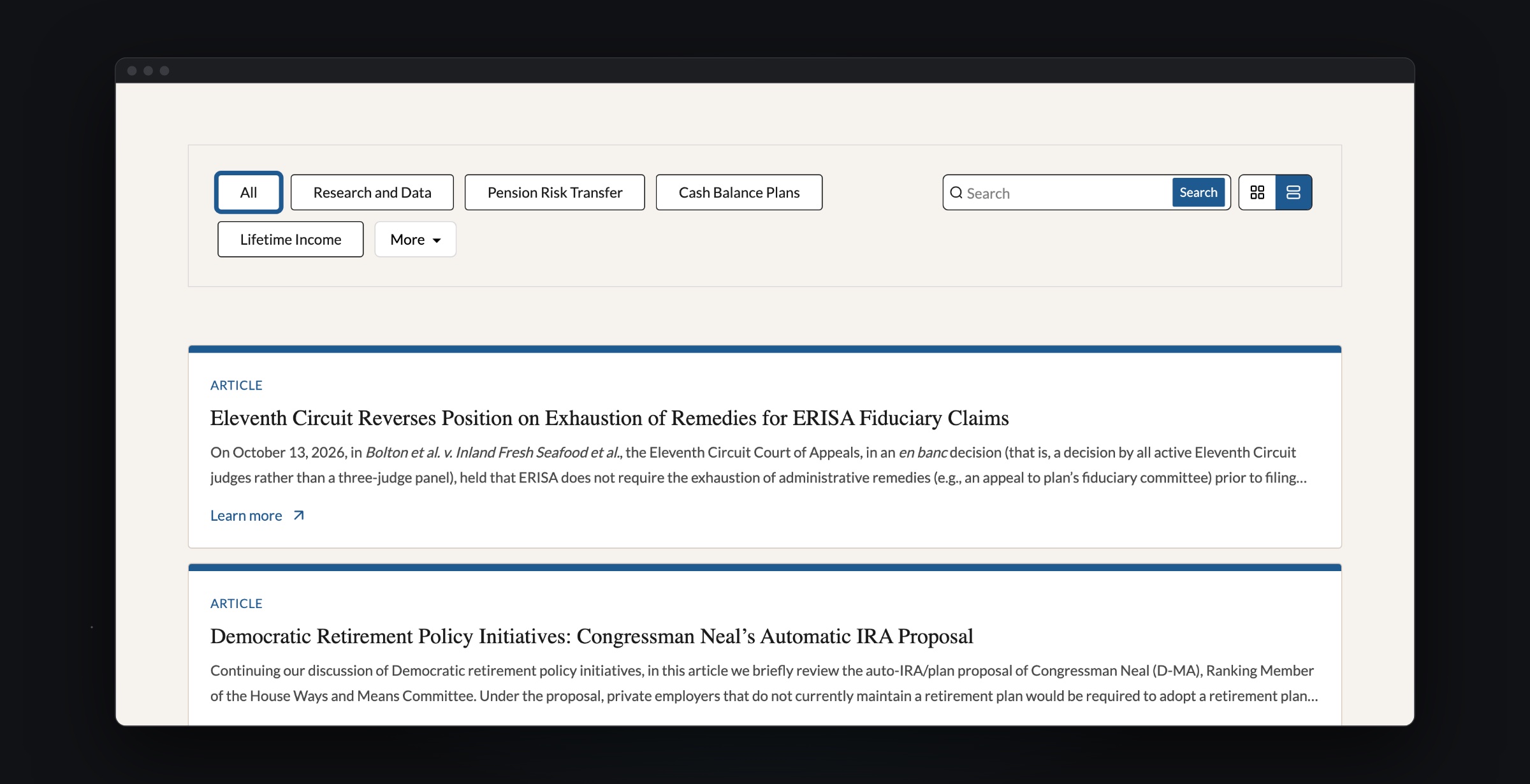
- Preserving relationships between articles, topics, and tags.
- Supporting different page structures and content requirements.
- Building reusable components that could support varied layouts.
- Integrating Storyblok's Visual Editor into the Next.js frontend.
- Maintaining SEO, routing, and responsive behavior.
- Improving website performance and resolving layout issues.
What We Built
Contentful-to-Storyblok Migration
We developed migration tooling to move existing content from Contentful into Storyblok.
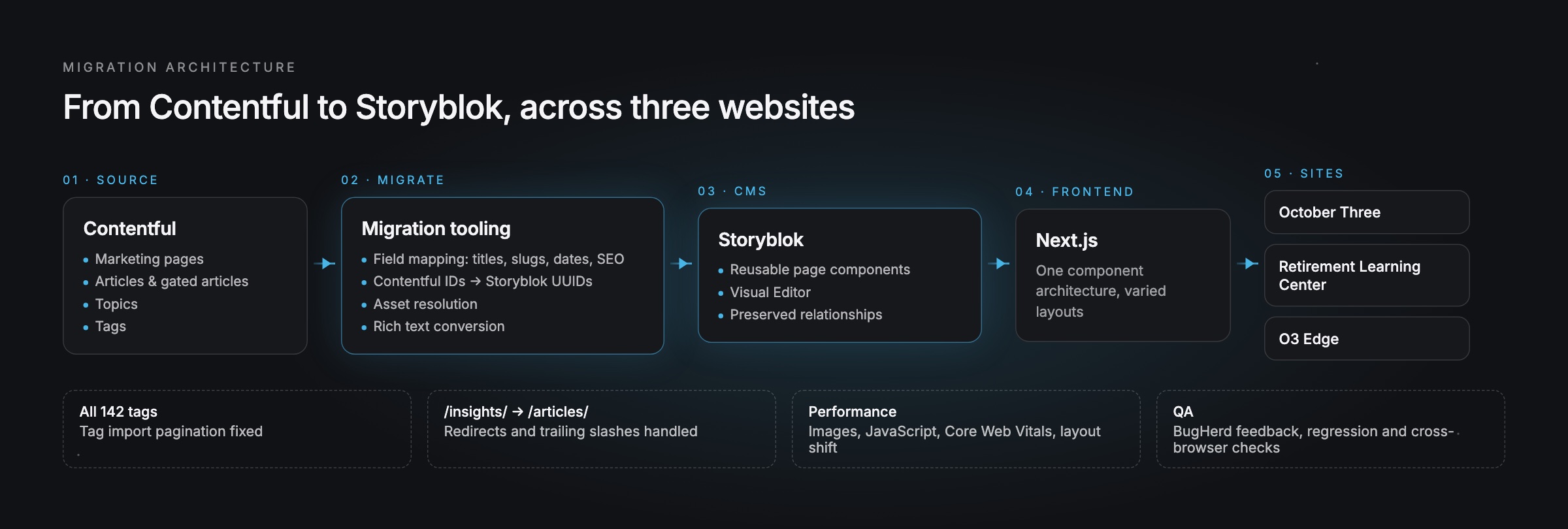
The migration covered marketing pages, articles, gated articles, topics, and tags. Content fields such as titles, descriptions, slugs, dates, SEO information, and rich text were mapped into the corresponding Storyblok structures.
Content relationships were also preserved. Contentful IDs were mapped to Storyblok UUIDs so that references between articles, topics, and tags continued to work after migration.
The migration also handled asset resolution and the conversion of existing rich text and page content into the new CMS structure.
A pagination issue in the tag import process was addressed to ensure all 142 tags were included in the migration.
Three Websites, Flexible Page Architecture
The three websites had different content needs, so the frontend needed to support varied page layouts without relying on a separate custom implementation for every page.
We built reusable Storyblok components for common page sections and content elements, including:
- Hero and banner sections
- Contact sections
- Content sections, blocks, and cards
- Testimonials
- Buttons and calls to action
- Accordion items
These components provided a consistent foundation for building and maintaining pages while allowing each website to retain its own layouts and content presentation.
Storyblok Visual Editor Integration
We integrated Storyblok's Visual Editor with the Next.js frontend to make content editing more direct.
The reusable component structure connected CMS-managed content to the website, allowing editors to work with page sections through Storyblok while keeping the frontend implementation organized and maintainable.
SEO, Routing, and Performance
The work also included improvements to the websites' SEO and performance foundations.
This involved handling URL transitions, including the move from /insights/ to /articles/, and accounting for redirect behavior and trailing slashes.
We also worked on image and JavaScript optimization, Core Web Vitals, Lighthouse performance, and layout-shift fixes to improve the overall browsing experience.
Quality Assurance
With three websites being updated, testing was important to ensure that the migrated content, components, and frontend behavior worked correctly.
We used BugHerd feedback to identify issues, implement fixes, and verify changes across the websites.
Testing covered:
- Responsive layouts across screen sizes
- Navigation and page behavior
- Forms and HubSpot integration
- CMS content and component rendering
- Cross-browser behavior
- Regression checks after fixes
- Lighthouse and Core Web Vitals reviews
This helped maintain consistency and catch issues across the three websites as the migration and updates progressed.
The Hard Part
The biggest challenge was managing the complexity of three websites while moving their content into a new CMS structure.
Each website had its own content and presentation requirements, but the underlying migration needed to preserve the relationships and structure of the existing content.
Articles, topics, and tags needed to remain connected. Rich text and assets needed to render correctly. Page sections had to be mapped into reusable components without losing the flexibility required by each website.
The solution required careful content mapping, migration tooling, and a component architecture that could support different website experiences without duplicating every implementation.
The Outcome
The project delivered a modernized foundation for all three websites, with content migrated from Contentful to Storyblok and a reusable frontend architecture built with Next.js.
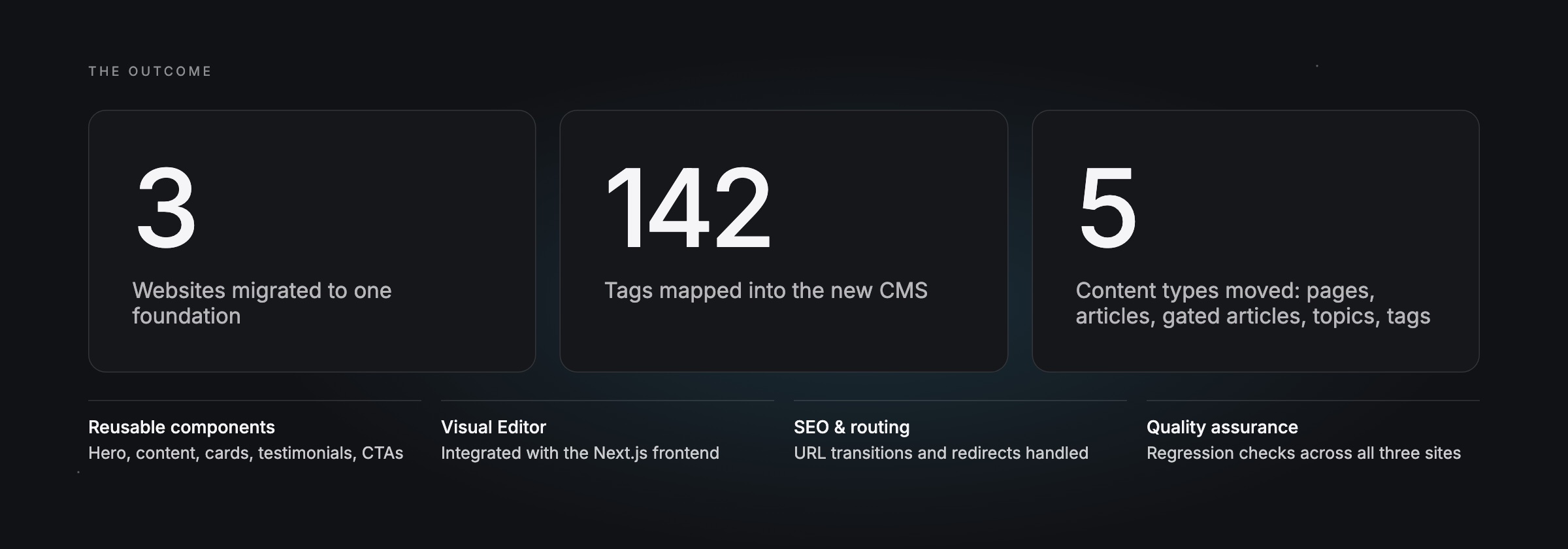
Key outcomes included:
- Migrated content across October Three, Retirement Learning Center, and O3 Edge.
- Moved marketing pages, articles, gated articles, topics, and tags into Storyblok.
- Mapped all 142 tags into the new CMS structure.
- Preserved content relationships through ID-to-UUID mapping.
- Built reusable Storyblok components for common page sections.
- Integrated the Storyblok Visual Editor.
- Improved SEO, routing, and performance foundations.
- Completed QA and regression checks across the websites.
Why This Matters
Modernizing one website is already a significant undertaking. Doing it across three connected websites requires a content architecture that can support different audiences, page structures, and editorial needs.
For October Three, the work brought together CMS migration, reusable frontend development, editorial tooling, and performance improvements across three distinct website experiences.
The result was a more maintainable foundation that made it easier to manage content and continue developing each website independently.
Have several websites to migrate or modernize?
Let's talk about how Infinite Build can help you build a content foundation that scales across every site.